

Steffans to Ovesen: An Evolution

Karrine Steffans represents a specific chapter in Elisabeth Ovesen’s publishing history, but the questions at the center of that work never disappeared. They evolved with her.
The earlier books were largely concerned with autonomy, identity, and shame: what happens when a woman tells her own story, claims ownership of her body and choices, and refuses to allow other people to decide what those choices mean about her. Much of that work was written from inside the struggle for self-definition. It asked what it takes to survive experiences that shape you, withstand the judgment that follows you, and eventually separate who you are from what has happened to you.
Over time, a different question emerged: What happens after you become your own?
For Elisabeth, the answer required looking beyond identity and toward the conditions in which a life is actually lived. Autonomy gave her the right to choose, but wellness asked whether those choices were sustaining her. Identity established who she was, but environment asked whether the spaces around her reflected that person. Surviving shame taught her to withstand exclusion and judgment, but community raised a more hopeful question: where, and with whom, could she genuinely belong?
That evolution now sits at the center of her work.
Today, Elisabeth writes about wellness not merely as physical health, but as the ongoing practice of building a life that supports who you are becoming. She explores spaces because our homes, surroundings, and social environments quietly influence how we think, feel, behave, and grow. And she writes about community because becoming yourself is only part of the work; eventually, we must decide what kinds of relationships, conversations, and circles deserve access to the person we have fought to become.
In that sense, Elisabeth’s current work is not a departure from what came before. It is what came next.
The earlier work asked how a woman might reclaim herself from other people’s expectations. The work now asks what she can build once she does.
Karrine Steffans told the story of becoming free enough to belong to yourself. Elisabeth Ovesen is interested in what we do with that freedom: how we become well, how we create spaces that sustain us, how we find and build community, and ultimately, how we construct a life that feels like our own.
Earlier Works by Karrine Steffans
Before publishing under her own name, three-time New York Times bestselling author Elisabeth Ovesen wrote a body of nonfiction under the pen name Karrine Steffans.
Beginning with Confessions of a Video Vixen in 2005, the books explored women’s experiences with sexuality, power, relationships, identity, shame, and the entertainment industry. The series became part of a larger cultural conversation about who gets to tell women’s stories, how those stories are received, and the complicated relationship between autonomy and public judgment.
Elisabeth retired Karrine Steffans as a nonfiction pen name in 2015. Today, she writes and works under her own name, while the books published as Karrine Steffans remain part of her literary history.

Confessions of a Video Vixen
2005
Published by Amistad/HarperCollins in 2005, Confessions of a Video Vixen introduced Karrine Steffans to readers and became a New York Times bestseller. The memoir chronicled Elisabeth’s experiences as a young woman navigating the entertainment industry while examining sexuality, exploitation, power, survival, and agency.
Twenty years after its original publication, a 20th-anniversary edition was released in 2025, returning the book to readers within a cultural landscape that had changed considerably since its debut.

The Vixen Diaries
2007
Published by Grand Central Publishing in 2007, The Vixen Diaries continued the story begun in Confessions of a Video Vixen, examining relationships, motherhood, celebrity, personal responsibility, and the consequences of becoming publicly known through an intensely personal story.
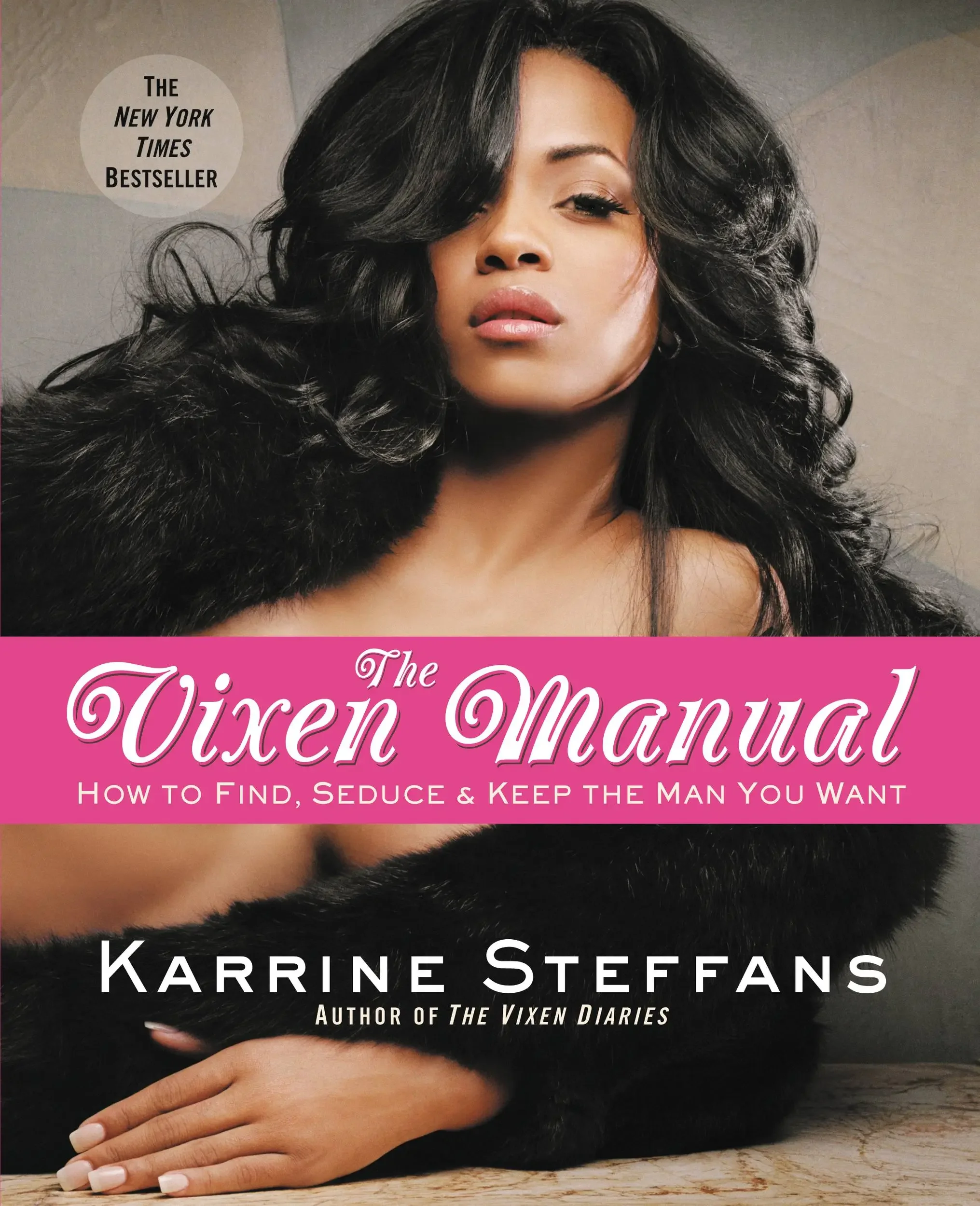
The Vixen Manual
2009
Published by Grand Central Publishing in 2009, The Vixen Manual: How to Find, Seduce, and Keep the Man You Want shifted from memoir toward relationship advice, drawing from Elisabeth’s observations and experiences to explore attraction, intimacy, communication, and romantic relationships.

SatisFaction
2012
Published in 2012, SatisFaction: Erotic Fantasies for the Advanced & Adventurous Couple explored sexual communication, intimacy, fantasy, and experimentation within adult relationships.

Decor + the Single Girl
2014
Published by BenBella Books in 2014, Decor and the Single Girl: How to Design Your Life Around the Relationship You Want connected relationships with lifestyle and environment, examining how women can create homes and lives that reflect their priorities rather than waiting for a relationship to define them.

Vindicated
2015
Published by BenBella Books in 2015, Vindicated: Confessions of a Video Vixen, Ten Years Later revisited the decade following Confessions of a Video Vixen. The book reflected on public identity, relationships, motherhood, mistakes, growth, and what it meant to live with the consequences of telling an intensely personal story in public. Vindicated marked the conclusion of Elisabeth’s nonfiction work as Karrine Steffans.